

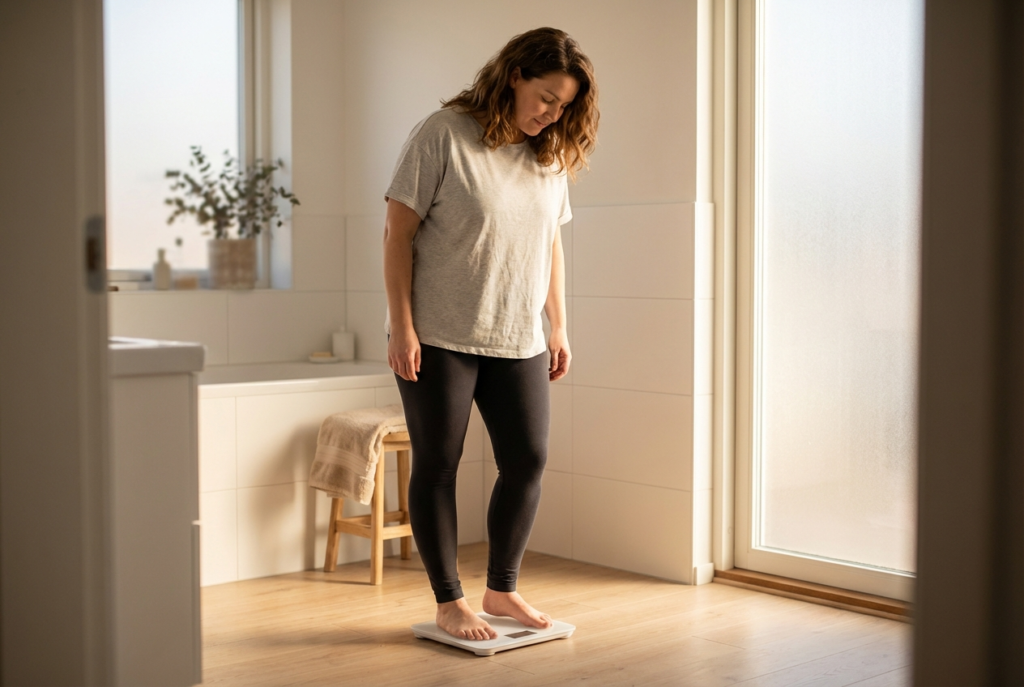
You started Ozempic, the scale moved steadily for a few months, and then — nothing. You haven’t changed your diet. You haven’t missed a dose. And yet the scale won’t budge.
Here’s the thing: this isn’t a sign Ozempic stopped working. It’s one of the most predictable moments in the entire GLP-1 journey. You’re not broken. Your body is doing exactly what biology designed it to do.
What a Plateau Actually Is
A weight loss plateau is when the scale stops moving for two weeks or more despite staying consistent with your medication, diet, and activity. One slow week isn’t a plateau. Two to three weeks of zero movement likely is.
The key thing to understand: the medication didn’t stop working. Your body adapted.
Research on semaglutide shows weight loss follows a predictable pattern — rapid early progress, a slowdown around the 12–16 month mark, and maximum weight loss typically around week 60 of treatment. This happens with every form of weight loss, from calorie restriction to bariatric surgery. It’s not a failure. It’s biology.
Why Your Body Fights Back
From your body’s perspective, losing significant body mass looks like a survival threat. Three mechanisms kick in to slow things down:
- Adaptive thermogenesis — as your weight drops, your resting metabolic rate decreases. Your body becomes more efficient and burns fewer calories than expected, even for the same activities. This goes beyond what body size alone would predict.
- Hormonal pushback — weight loss causes leptin (satiety hormone) to drop and ghrelin (hunger hormone) to rise. Ozempic suppresses this, but not completely. Over time your body tries to dial the hunger signals back up.
- Set point resistance — your brain defends a preferred weight range by slowing metabolism and increasing appetite. Over months on Ozempic, your set point gradually shifts — but it’s a slow process. A plateau often marks where your body is catching up before the next drop.
- Muscle loss — without resistance training, some weight lost on Ozempic is lean muscle, not just fat. Less muscle means a lower resting metabolic rate and a stickier plateau.
Common Reasons It’s Happening Right Now
Beyond the biology, there are practical triggers worth checking:
- Calories crept up without you noticing — Ozempic suppresses appetite strongly at first. As your body adapts, portion sizes can quietly grow back. You’re still eating less than before, but possibly more than a few months ago.
- Activity dropped after early success — it’s common to unconsciously move less once some weight comes off. Fewer steps, more elevators. These micro-reductions add up over weeks.
- Your dose is no longer optimal — if you haven’t titrated up yet, the plateau may signal your body needs more medication, not more willpower.
- You’re losing muscle, not fat — the scale looks the same either way, but losing muscle slows your metabolism and makes further fat loss harder.
- Sleep and stress are working against you — cortisol promotes fat storage and impairs insulin sensitivity. Poor sleep spikes ghrelin. Both are easy to overlook when you’re focused on food and medication.
What to Actually Do About It
A plateau isn’t the time to panic — but it is the time to be strategic. Here’s what works.
1. Audit your calories honestly
Not forever — just for one or two weeks. Track what you’re actually eating, not what you think you’re eating. As you lose weight, your caloric needs genuinely decrease. The portion that put you in a deficit at 220 lbs may not be enough at 185 lbs. Small adjustments — not dramatic cuts — often restart progress.
2. Prioritize protein at every meal
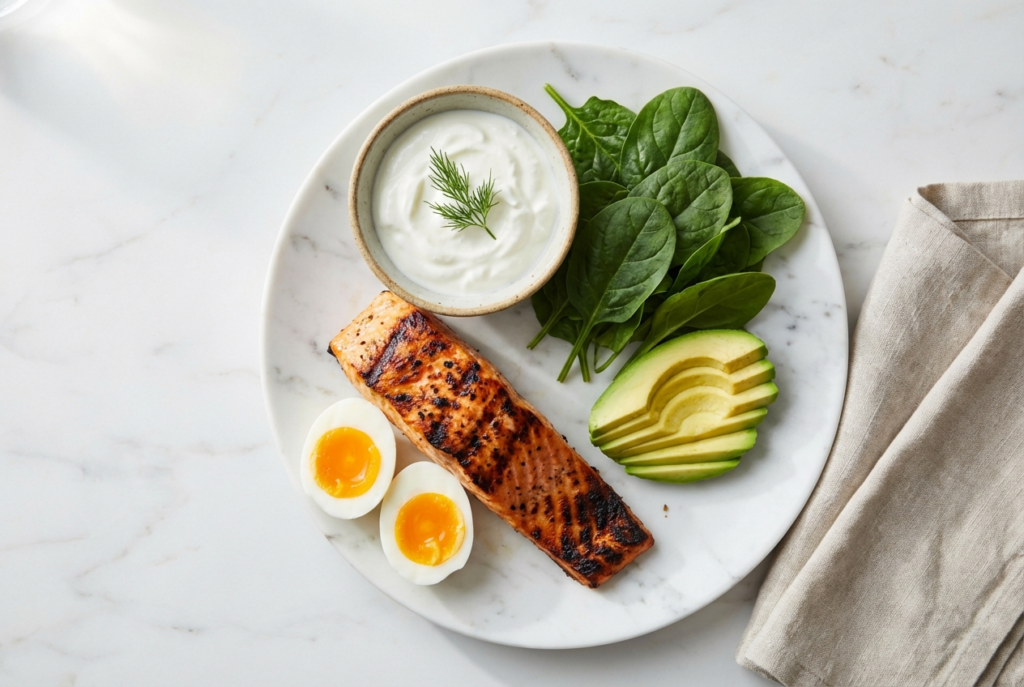
Protein is the single most important dietary lever during a plateau. It preserves muscle, keeps you fuller longer, and has a higher thermic effect — your body burns more calories digesting it. Aim for 25–40 grams per meal. On Ozempic, appetite suppression can make eating enough feel hard, which is exactly why protein needs to come first.
3. Add resistance training
This is the most underused tool in the GLP-1 toolbox. Cardio burns calories in the moment; resistance training builds muscle that raises your metabolic rate long-term — directly counteracting adaptive thermogenesis. You don’t need to become a gym person. Two or three sessions per week of bodyweight exercises, resistance bands, or weights is enough. The goal is muscle preservation, not bodybuilding.
4. Don’t cut calories too aggressively
It’s tempting to slash calories when the scale stops moving, but going too low often backfires. Extreme restriction increases muscle loss and deepens metabolic adaptation — making your plateau longer, not shorter. Small reductions (100–200 calories per day) are more effective than dramatic cuts.
5. Talk to your prescriber about your dose
If you’re not on the maximum dose, titrating up may help. At a higher dose, appetite suppression is stronger and may be enough to move things again. Don’t self-adjust — your prescriber can evaluate whether an increase makes sense based on how you’ve tolerated the medication so far.
6. Consider switching medications
If you’re on Ozempic and have plateaued, your doctor may suggest transitioning to Wegovy (the same drug — semaglutide — at a higher dose approved specifically for weight loss) or tirzepatide (Mounjaro/Zepbound), which targets both GLP-1 and GIP receptors and tends to produce greater weight loss in trials. This isn’t giving up — it’s a reasonable clinical next step.
7. Take sleep and stress seriously
Sleep deprivation raises ghrelin and lowers leptin — exactly the hormonal combination that makes weight loss harder. Chronic stress elevates cortisol, which promotes fat storage and creates insulin resistance. Even marginal improvements — consistent sleep times, daily walks, cutting back on alcohol — can help restart progress.
How Long Should You Wait Before Acting?
Two to three weeks of stalled progress is normal — don’t change anything yet. The scale fluctuates for reasons unrelated to fat loss (water retention, hormonal cycles, inflammation), so look at the monthly trend, not the daily number.
Four to six weeks without movement is worth a conversation with your prescriber. If the plateau has lasted 6–8 weeks and hunger or cravings are returning, something needs to change — whether that’s diet, activity, or medication.
The Bottom Line
A plateau is not the end of your progress. It’s a pause — your body adjusting to a new normal before the next phase. Almost everyone on GLP-1 medications hits one. The people who break through are the ones who make two or three small adjustments and stay consistent while their biology catches up.
Ozempic is still working. Your body is just working harder to maintain itself — and now you know exactly why, and what to do about it.
Related articles:
Medical Disclaimer
The content on this page is for informational and educational purposes only. It reflects general user experiences and publicly available clinical information about GLP-1 medications — not personal medical advice. Every person’s health situation is different. Before starting, adjusting, or stopping any medication or treatment, please consult a licensed healthcare provider or specialist who can evaluate your individual circumstances.