

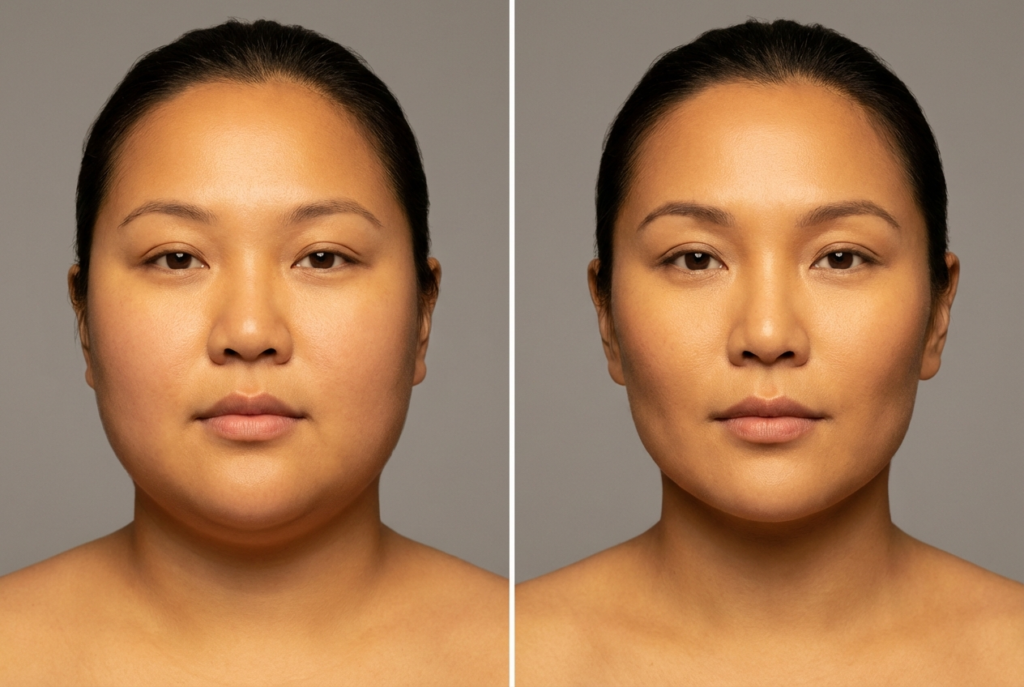
You’ve lost 20, 30, maybe 40 pounds. Your clothes fit differently, your energy is better, your labs are improving. By every measure that matters, the medication is working. And then you look in the mirror and something is off. Your cheeks look hollow. There are shadows under your eyes that weren’t there before. Your jaw seems looser. You look tired — or older — in a way you can’t quite explain.
This is what people are calling “Ozempic face.” It’s real, it’s more common than the clinical trials suggested, and it’s driving thousands of Reddit threads, dermatologist appointments, and aesthetic consultations. It’s also widely misunderstood — including what causes it, who gets it worst, and what can actually help.
What Ozempic Face Actually Is
“Ozempic face” was coined by celebrity dermatologist Dr. Paul Jarrod Frank after he began seeing a pattern in patients using GLP-1 medications: significant facial volume loss that made them appear older, gaunt, or aged beyond what their weight loss alone would explain.
The term is a bit misleading. Ozempic face isn’t caused by the medication itself — it’s caused by rapid weight loss, which GLP-1 drugs produce very effectively. The same changes happen after bariatric surgery or extreme dieting. What’s different now is scale: millions of people are losing 15–20% of their body weight in months, and the face is showing it.
The changes typically include:
- Hollow or sunken cheeks — facial fat pads shrink along with body fat
- Deeper nasolabial folds — the lines running from nose to mouth become more prominent
- Sagging skin along the jawline and jowls
- Sunken eyes and more visible dark circles as fat around the eye socket diminishes
- Thinner lips, which lose some volume with fat loss
- More prominent bone structure — sharper, but aged rather than sculpted
- Loose or crepey neck skin
Together these create what people describe as looking older than they are — sometimes by years — even as their body looks better than it has in decades.
Why Your Face Gets Hit So Hard
Your body loses fat systemically — everywhere at once — and the face is often one of the first places where changes become visible.
- Facial fat is structural. The fat pads in your cheeks, under your eyes, and around your temples act as scaffolding that holds skin up. When they shrink, the skin sags.
- Skin can’t keep up with rapid loss. Lose weight slowly and skin adapts. Lose 20 pounds in three months and it ends up loose over a smaller structure than it was designed to cover.
- Collagen and elastin are depleted. Rapid weight loss reduces both. A 2025 study also found GLP-1 medications may reduce stem cell energy available for tissue regeneration — an additional mechanism beyond fat loss alone.
- Muscle loss compounds the problem. Studies suggest 25–40% of weight lost on GLP-1s is lean mass. The face has around 30 muscles per side — losing facial muscle adds to hollowing and sagging.
- Age and genetics matter. Older patients and those with lower baseline subcutaneous fat see more pronounced changes. Losing more than 20% of body weight worsens the effect.
Is It Permanent?
Mostly, yes — if you maintain your weight loss. Unlike hair loss from telogen effluvium, the fat that leaves your face doesn’t spontaneously return, and skin that has lost elasticity doesn’t fully recover on its own. A 2025 review found that during weight regain, fat distribution rarely returns to its pre-loss state — meaning even if you regain elsewhere, the face may not refill the way it emptied.
If you stop Ozempic and regain significant weight, facial fullness typically does return — but given the health consequences of regain, this isn’t a recommended path. This is why prevention started early is far more effective than correction after the fact.
What to Do Before It Happens
The best window to act is before you see changes — ideally in the first one to two months of treatment. These interventions won’t eliminate all facial changes, but they can meaningfully reduce their severity.
Slow your weight loss pace
This is the most impactful lever you have. Losing 1–2 pounds per week gives skin time to adapt; losing 4–5 pounds per week does not. If you’re losing very rapidly, talk to your prescriber about staying at a lower dose longer before titrating up. You’ll still reach your goals — just with a gentler impact on your face, your hair, and your muscles.
Prioritize protein
Protein supports collagen synthesis, maintains muscle mass, and gives skin the raw materials it needs to stay resilient. Aim for 20–30 grams per meal from whole food sources — eggs, Greek yogurt, chicken, fish, legumes.
Stay genuinely hydrated
GLP-1 medications suppress thirst signals along with appetite — many people on Ozempic are mildly dehydrated without realizing it. Even mild dehydration makes laxity and fine lines more visible. Aim for 2 liters of water daily, more if you’re active.
Build a collagen-supporting skincare routine
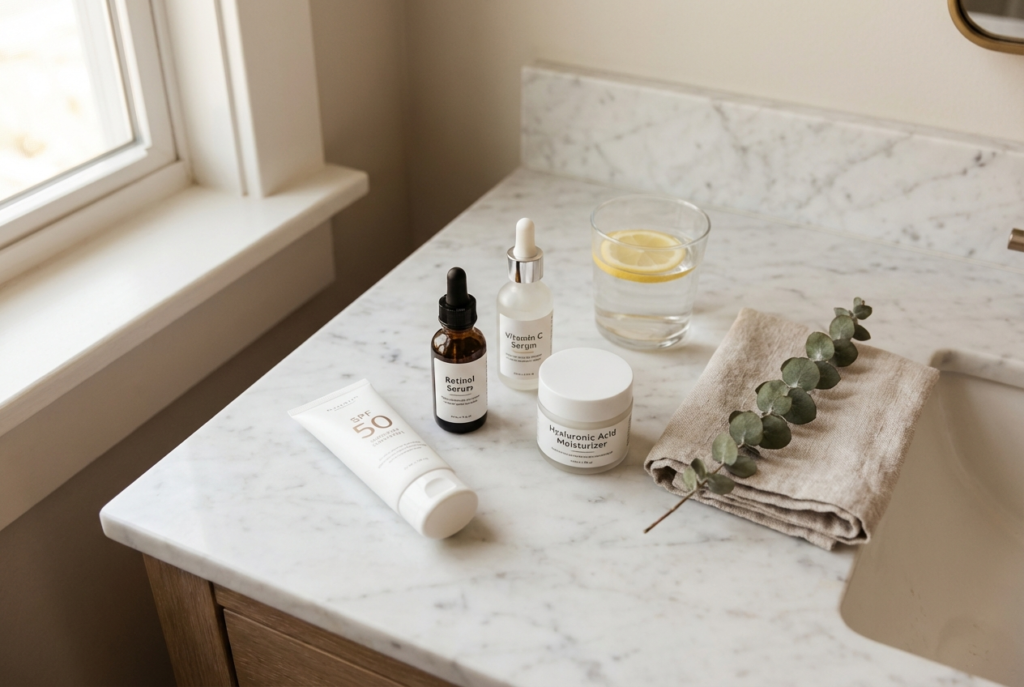
A consistent skincare routine improves skin resilience, thickness, and elasticity — which affects how well skin adapts to the structural changes underneath. Dermatologists recommend this core routine for GLP-1 patients:
Morning:
- Gentle hydrating cleanser (ceramides or hyaluronic acid)
- Vitamin C serum — the most evidence-backed antioxidant for protecting existing collagen
- Hyaluronic acid serum — pulls moisture into the skin, adding plumpness as fat pads thin
- Broad-spectrum SPF 30 or higher — UV exposure degrades collagen faster than almost anything else
Evening:
- Gentle cleanser
- Retinoid (retinol or prescription tretinoin) — gold standard for stimulating collagen production; start with a low percentage 2–3 nights per week
- Peptide serum — supports collagen and elastin synthesis
- Rich moisturizer
Do resistance training
Full-body resistance training reduces the percentage of weight lost from lean mass, which indirectly protects facial muscle and structure. Two to three sessions per week is sufficient — the goal is preservation, not building.
What to Do If Changes Have Already Appeared
If you’re already seeing hollowing, sagging, or aged-looking changes, there are effective options — ranging from free to significant investment.
Start with the lifestyle basics
Before spending on procedures, make sure protein, hydration, retinoids, and SPF are consistently in place. Many people are surprised by how much improvement comes from these basics alone.
Non-invasive in-office treatments
- Microneedling — creates micro-injuries that trigger collagen production. Improves texture, fine lines, and mild laxity. Typically requires 3–4 sessions.
- Radiofrequency (RF) — e.g. Morpheus8 — combines microneedling with RF energy to tighten skin and stimulate collagen at a deeper level. More effective for moderate laxity.
- PRP (platelet-rich plasma) — uses your own blood to concentrate growth factors, then injects them to stimulate collagen and tissue regeneration. Often combined with microneedling.
Injectable fillers
Dermal fillers are the most direct, immediate solution to volume loss — and for many people with Ozempic face, the most effective single intervention.
- Hyaluronic acid fillers (Juvederm, Restylane) — inject volume into areas of loss. Results are immediate, last 6–18 months, and are reversible. Best for targeted areas: under-eyes, cheeks, nasolabial folds, lips.
- Biostimulatory fillers (Sculptra, Radiesse) — stimulate your own collagen production over months rather than adding volume directly. Results last longer (2+ years for Sculptra). Often preferred for Ozempic face because the issue is diffuse volume loss across multiple areas.
- Fat grafting — uses your own fat, harvested from elsewhere and injected into the face. Can be longer-lasting than synthetic fillers, though fat survival rates make outcomes less predictable. More invasive.
Surgical options
For significant laxity that non-surgical treatments can’t adequately address — particularly after large weight loss — surgical options exist: facelift, neck lift, brow lift. Most specialists recommend waiting until weight has been stable for at least 6–12 months before pursuing surgery.
The Trade-Off Nobody Prepares You For
Most people starting Ozempic are not told that their face may change significantly. A 2023 review in Facial Plastic Surgery found that providers seldom counsel patients about the potential impact on facial appearance — leaving many blindsided by changes that arrive just as they’re celebrating weight loss milestones.
The weight loss GLP-1 medications produce has documented benefits for cardiovascular health, diabetes, blood pressure, sleep apnea, kidney function, and longevity. Ozempic face has no negative health effects — it’s purely cosmetic. Many people reach their weight goal and decide the trade-off was entirely worth it. Others find the facial changes genuinely distressing and want to address them. Both responses are valid. What matters is knowing this is coming and having a plan.
Related articles:
- Ozempic Hair Loss: Why It’s Happening and How to Stop It →
- GLP-1 Side Effects: What Your Doctor Won’t Tell You →
- Why Your Weight Loss Has Stalled on Ozempic →
Medical Disclaimer
The content on this page is for informational and educational purposes only. It reflects general user experiences and publicly available clinical information about GLP-1 medications — not personal medical advice. Every person’s health situation is different. Before starting, adjusting, or stopping any medication or treatment, please consult a licensed healthcare provider or specialist who can evaluate your individual circumstances.