
Quick Summary
- Most people regain significant weight after stopping Ozempic — studies show an average of two-thirds of lost weight returns within a year.
- This is driven by biology, not willpower: hunger hormones rebound sharply when the medication leaves your system.
- A slow taper is generally better tolerated than stopping abruptly.
- Building sustainable habits around protein, exercise, and sleep before stopping gives you the best chance of holding your results.
- For many people, GLP-1 medications are a long-term or lifelong treatment — and that’s a legitimate medical choice.
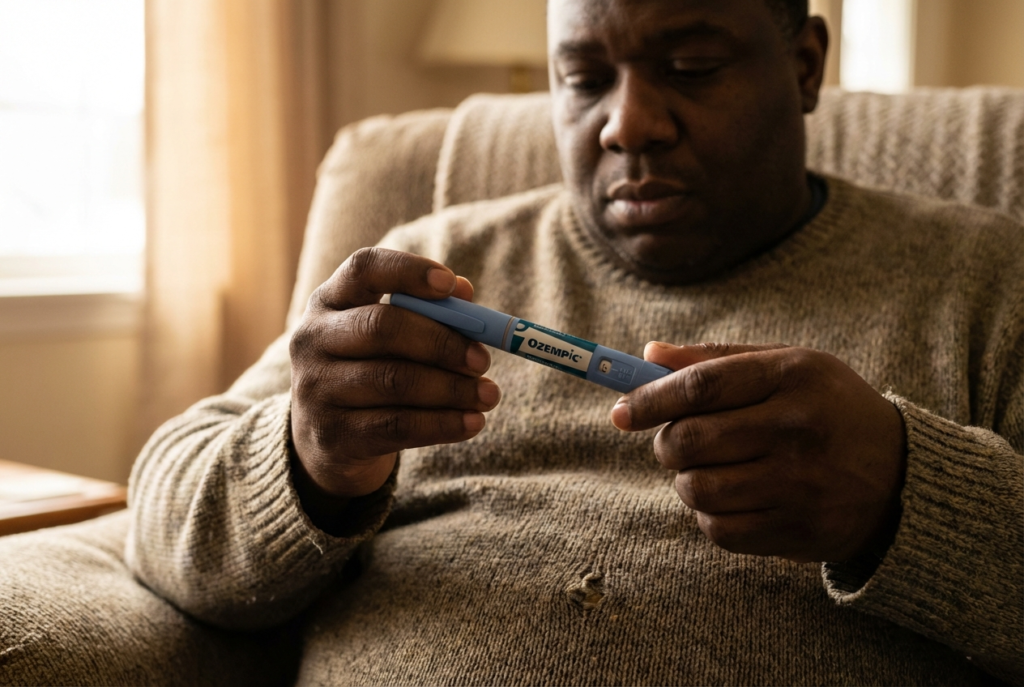
Coming off Ozempic is a topic that doesn’t get nearly enough honest conversation. Thousands of people stop the medication every month — often without a clear plan — and the consequences can be genuinely difficult. Maybe your insurance stopped covering it. Maybe you’ve reached your goal weight and want to see if you can maintain it. Maybe side effects became intolerable, or you’re planning a pregnancy, or you simply can’t afford $1,000 a month out of pocket.
Whatever the reason, if you’re considering stopping — or you’ve already stopped — this is what you need to know.
Why Weight Comes Back: It’s Biology, Not Willpower
Let’s start with the most important thing: weight regain after stopping GLP-1 medications is not a personal failure.
The STEP 4 trial — a large, well-designed clinical study — followed people who had lost weight on semaglutide and then stopped. Within 12 months of stopping, participants regained on average about two-thirds of the weight they had lost. Similar findings appear in research on liraglutide and other GLP-1 drugs.
This happens because obesity is a chronic metabolic condition, not a behavior problem. GLP-1 medications correct a biological dysfunction — an impairment in the body’s hunger and satiety signaling systems. When you remove the medication, the dysfunction returns.
The analogy that makes this click for most people: if someone with type 2 diabetes stops metformin, their blood sugar returns to elevated levels. That’s not a failure of willpower — it’s the underlying condition reasserting itself. The same logic applies to GLP-1 medications and weight.
What Happens to Your Hunger When You Stop
One of the most jarring parts of coming off Ozempic: hunger often comes back louder than before.
GLP-1 medications modulate ghrelin (the primary hunger hormone) and enhance leptin signaling in the brain. Food noise — persistent thoughts about food, cravings, the urge to eat between meals — is dramatically quieted for most people while on the medication. When semaglutide clears your system (which takes several weeks given its long half-life), these hormonal brakes come off.
Your body has also adapted to a lower calorie intake during treatment, which means your resting metabolic rate has likely decreased — a normal consequence of weight loss. Your body now needs fewer calories to maintain your current weight than it did at your starting weight, making the margin for error smaller.
The Rebound Timeline: What to Expect
Weeks 1–3 after last dose: Many people notice little change. The medication is still active in your system at meaningful levels — semaglutide has a half-life of approximately one week.
Weeks 3–6: Appetite begins to return. Food noise starts picking up. You may find yourself thinking about food more between meals. This is the critical window where many people are caught off guard.
Months 2–4: Weight regain often accelerates during this period for those without a solid maintenance plan. The original hunger patterns are largely back.
Months 6–12: Research suggests this is when most regain occurs. People who maintained the most weight loss at this point tended to have robust exercise habits, high protein intake, and support structures in place.
Who Should Consider Stopping vs. Staying On Medication
Reasons Stopping May Make Sense
- Intolerable side effects that haven’t improved with dose adjustment or dietary changes
- Pregnancy or planning for pregnancy (GLP-1 medications are not recommended during pregnancy)
- Achieving and maintaining a healthy weight with strong established habits
- Financial unsustainability with no access to assistance programs
- Specific medical reasons identified by your doctor
Reasons Staying On May Make More Sense
- Obesity-related health conditions (type 2 diabetes, sleep apnea, hypertension, elevated cardiovascular risk) being improved by the medication
- A history of weight cycling that has made maintaining weight loss historically very difficult
- The medication is working well with manageable or no side effects
- Access to affordable long-term supply
The growing medical consensus is that for many people, GLP-1 medications are a long-term treatment, not a short course to be stopped when goals are reached — similar to how blood pressure medications or statins are often taken indefinitely. There is no shame in that.
Tapering vs. Stopping Cold: Which Is Better?
A gradual taper is almost always preferable to stopping abruptly. With a taper, you drop back to the previous lower dose for several weeks before stopping entirely. For example, if you’re on 1mg of semaglutide, you might go back to 0.5mg for 4–6 weeks before stopping.
This gives your body’s appetite regulation systems more time to adjust, and gives you time to observe and reinforce your new habits before the full hunger rebound hits. Think of it as a training period — you’re practicing navigating your appetite with progressively less pharmacological support.
Dietary Strategies to Maintain Weight After Stopping
Keep Protein High
Protein is the most satiating macronutrient — it triggers fullness signals more powerfully than carbohydrates or fat, and it preserves muscle mass. When hunger returns after stopping, a high-protein diet provides a natural brake on overeating. Aim to continue eating at least 0.7–1 gram of protein per pound of goal body weight after stopping.
Don’t Return to Ultra-Processed Foods
Ultra-processed foods are engineered to override satiety signals. While you were on Ozempic, the medication partially muted their pull. Without it, they become much more dangerous to your maintenance efforts. Structure your environment so that whole, satiating foods are the default.
Eat Slowly and Mindfully
On Ozempic, you likely ate slower because your stomach felt full faster. When the medication is gone, you have to be deliberate about this. Put your fork down between bites. Wait 15–20 minutes before going back for more. Satiety signals take time to reach the brain.
Exercise: The Most Powerful Tool for Long-Term Maintenance

Study after study on long-term weight maintenance points to the same conclusion: people who exercise regularly keep weight off far more successfully than those who rely on diet alone.
Resistance training is the most important type for weight maintenance after GLP-1 use. If you lost muscle during your time on medication — which is likely without active resistance training — rebuilding it is one of the best things you can do for your long-term metabolic health. Aim for at least 2–3 strength training sessions per week, combined with regular daily walking.
Realistic Expectations
Maintaining 100% of your weight loss after stopping GLP-1 medication is genuinely difficult and, for most people, not the realistic outcome. However, maintaining a meaningful portion of your loss is absolutely achievable — and even partial maintenance represents real health gains.
Maintaining a 5–10% reduction in body weight from your starting point is associated with clinically significant improvements in blood pressure, blood sugar, cholesterol, and cardiovascular risk. Reframe success as health outcomes and habit quality, not a specific number on the scale.
What to Monitor After Stopping
- Blood sugar / HbA1c: If you have type 2 diabetes or prediabetes, glucose control may worsen. Monitor more frequently and discuss with your doctor.
- Blood pressure: Often improves with weight loss; may rise again with regain. Keep tracking it.
- Cholesterol panel: Schedule a lipid panel 3–6 months after stopping.
- Weight trends: Weigh yourself weekly so you catch gradual upward drift early — much easier to course-correct 5 lbs than 30 lbs.
- Mental health: Some people notice mood changes after stopping. GLP-1 receptors play a role in mood regulation. Mention any significant changes to your provider.
Coming off Ozempic is not a failure. Needing to go back on it later is not a failure. Regaining some weight is not a failure. Obesity is a chronic, biological condition — go in with your eyes open, a solid plan, and realistic expectations. And give yourself grace when it’s hard — because it will be hard, and that says nothing about your character.
This article is for informational purposes only and is not a substitute for professional medical advice. Always consult your healthcare provider before stopping or tapering any GLP-1 medication.