Two major studies published in March 2026 found that people taking GLP-1 medications like Ozempic and Wegovy were significantly less likely to experience worsening depression, anxiety, and addiction — results that have surprised researchers and are reshaping how doctors think about these drugs. The findings go far beyond weight loss. They suggest these medications may be doing something meaningful inside the brain itself.
Curious whether these effects could apply to you? find out if you’re a candidate.
The Lancet Psychiatry Study: 95,000 People, Years of Data
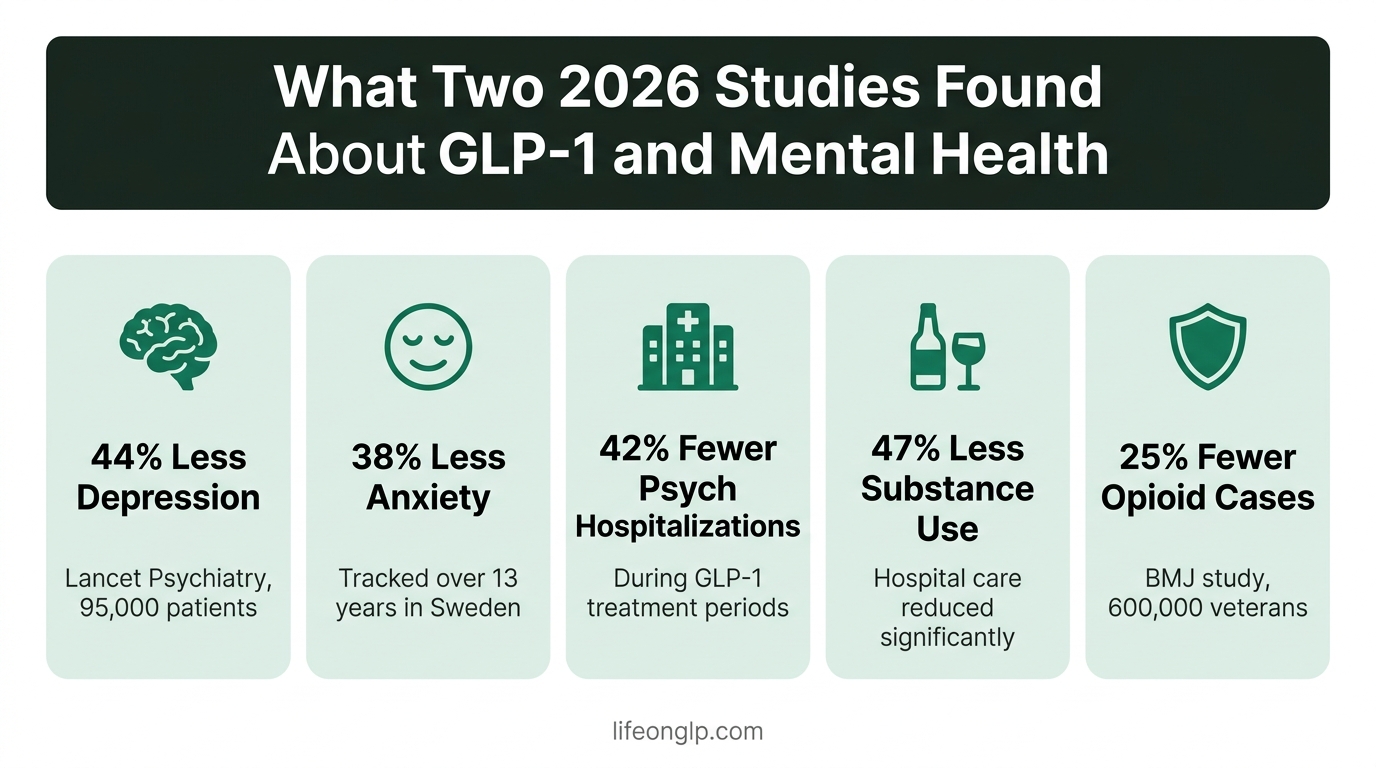
The most comprehensive of the two studies was published in The Lancet Psychiatry in March 2026. Researchers from the University of Eastern Finland, Karolinska Institutet in Stockholm, and Griffith University in Australia analyzed national health register data from nearly 95,000 people in Sweden who had depression or anxiety disorders and were also taking antidiabetic medications — tracking them between 2009 and 2022.
Among those who used semaglutide (the active ingredient in Ozempic and Wegovy), the results were striking:
- 44% lower risk of worsening depression during treatment periods
- 38% lower risk of worsening anxiety disorders
- 42% fewer psychiatric hospital visits
- 47% lower hospital care and sick leave related to substance use disorders
- Reduced risk of suicidal behavior
Even liraglutide — an older GLP-1 drug sold as Victoza — showed an 18% lower risk of worsening mental illness, though the effect was smaller than semaglutide’s.
Lead researcher Markku Lahteenvuo of the University of Eastern Finland noted that the mechanism is still not fully understood: “There may also be direct neurobiological mechanisms involved — for example, through changes in the brain’s reward system.”
The BMJ Study: 600,000 Veterans and the Addiction Connection
A second study, published in the BMJ, focused specifically on substance use disorders — and the numbers are equally eye-opening. Researchers analyzed data from over 600,000 veterans with diabetes, comparing those prescribed GLP-1 drugs (semaglutide, liraglutide, or tirzepatide) against those taking a different class of diabetes medication (SGLT2 inhibitors) over three years.
For people without a prior addiction history, GLP-1 drugs were associated with:
- 18% lower risk of developing alcohol use disorder
- 20% lower risk of cocaine use disorder
- 20% lower risk of nicotine dependence
- 25% lower risk of opioid use disorder
- 14% overall reduction in developing any substance use disorder
For people who already had an addiction, the results were even more dramatic:
- 31% fewer emergency department visits
- 26% fewer hospital admissions
- 39% fewer overdoses
- 25% fewer suicidal thoughts or attempts
- 50% fewer deaths
Important Context
The BMJ study cohort was 90% male with an average age of 65 — limiting how broadly these results apply to women and younger adults. Neither study proves that GLP-1 drugs cause mental health improvements. Both show association, not causation. Randomized clinical trials are needed to confirm.
Why Would a Diabetes Drug Affect the Brain?
The short answer: researchers are not entirely sure yet. But there are several plausible explanations being explored.
GLP-1 receptors are not just found in the pancreas and gut — they are distributed throughout the brain, including in regions that regulate mood, reward, and impulse control. Animal studies have shown that GLP-1 receptor activation in the brain can reduce dopamine-driven reward responses, which is thought to underlie the observed reductions in addictive behavior.
There is also the indirect pathway: weight loss itself can improve mood, self-esteem, energy, and sleep — all of which affect mental health. Reduced inflammation, better blood sugar control, and improved cardiovascular function may also play a role.
What makes the current findings particularly notable is that the mental health benefits in the Lancet Psychiatry study appeared independently of how much weight people lost — suggesting there may be something beyond the scale at work.
What This Means If You Are On GLP-1 Medication
If you are currently taking Ozempic, Wegovy, or a similar medication and have also noticed improvements in your mood, motivation, or relationship with food and alcohol — you are not imagining it. These studies validate what many people in the GLP-1 community have been reporting for years.
A few things to keep in mind:
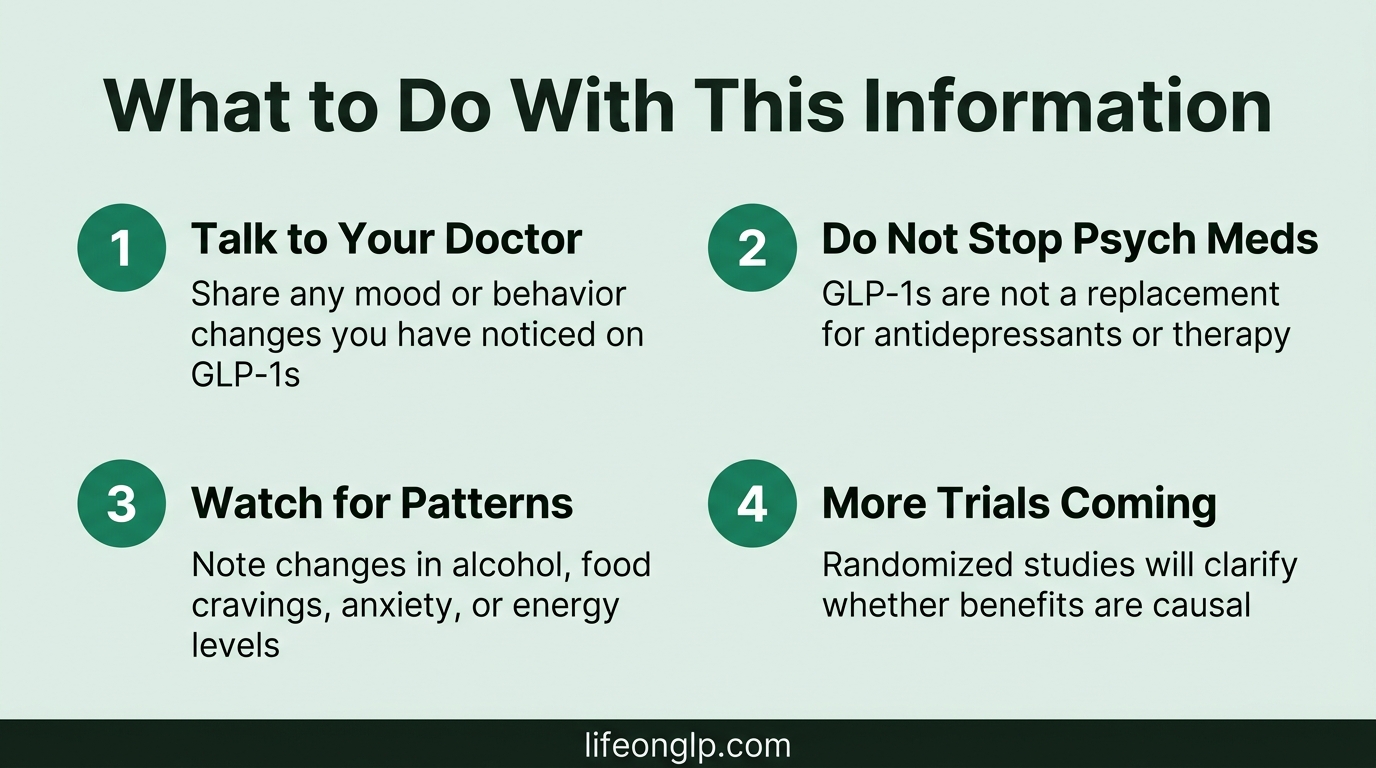
- Do not adjust or stop psychiatric medications without talking to your doctor first. GLP-1 drugs are not a replacement for antidepressants, therapy, or addiction treatment.
- These effects are not guaranteed for everyone. Individual responses vary significantly based on genetics, dosage, and baseline health.
- Tell your prescriber if you are experiencing significant mood changes — positive or negative — while on these medications. It is relevant clinical information.
- If you are struggling with addiction, evidence-based treatments like naltrexone, buprenorphine, and therapy remain the first-line options. GLP-1 drugs may eventually complement these — but that research is still ongoing.
What Comes Next
Both research teams called for randomized controlled trials — the gold standard of evidence — to confirm whether GLP-1 drugs can be deliberately used to treat depression, anxiety, or addiction. Those trials are now being planned and launched in several countries.
The FDA has not approved GLP-1 medications for any psychiatric indication. Until clinical trials provide clearer evidence of causation, prescribing these drugs specifically for mental health purposes would be off-label.
But the signal from two independent, large-scale studies published in the same month is hard to ignore. For a class of drugs that started as diabetes treatments and became the defining weight-loss medications of the decade, this may be the beginning of yet another chapter.
The research is still early, but the message is consistent: GLP-1 medications appear to be doing more than shrinking waistlines. If you have felt a shift in your mental state since starting treatment — clearer thinking, less anxiety, a quieter relationship with alcohol or food — the science is starting to catch up with your experience. Stay informed, stay in close contact with your care team, and check back at LifeOnGLP as this story develops.
Medical Disclaimer
The content on this page is for informational and educational purposes only. It reflects general user experiences and publicly available clinical information about GLP-1 medications — not personal medical advice. Every person’s health situation is different. Before starting, adjusting, or stopping any medication or treatment, please consult a licensed healthcare provider or specialist who can evaluate your individual circumstances.