You expected nausea. Maybe some bloating. But nobody warned you that Ozempic might make your gut go quiet for days at a time.
Constipation on semaglutide is different from other GI side effects — and that difference matters for how you manage it. While nausea, diarrhea, and vomiting typically lasted a median of 8, 3, and 2 days respectively in the STEP trials, constipation lasted a median of 47 days in the semaglutide group — far longer than any other GI side effect. It doesn’t spike and fade. It plateaus. And for many people, it persists quietly in the background for months.
This article covers why it happens, what the numbers actually look like, and the specific interventions that work — not the generic “drink more water” advice that fills most search results.
How Common Is Constipation on Ozempic?
Related: managing gas and bloating on GLP-1s and natural remedies the GLP-1 community actually uses.
The honest answer is: it depends on what you’re taking it for.
Across randomized controlled trials involving over 14,000 semaglutide patients, the mean prevalence of constipation was approximately 6.9%. That’s the diabetes-dose figure. The picture shifts considerably at higher doses used for weight loss.
Among people using semaglutide specifically for weight management, constipation prevalence climbs to around 24% — roughly four times the rate seen in diabetes patients. The dose is the key variable: higher doses mean more GI motility suppression.
In the landmark STEP 1 trial, gastrointestinal disorders — including constipation — were the most frequently reported adverse events, occurring in 74.2% of semaglutide participants versus 47.9% of those on placebo. Most of that gap is nausea and diarrhea, but constipation is a consistent contributor across every STEP trial.
The clinical picture is consistent: constipation is one of the top five reported side effects in every major semaglutide study. It’s listed alongside nausea, vomiting, abdominal pain, and diarrhea as one of the adverse effects most frequently associated with semaglutide discontinuation. In other words, for some patients, constipation is the side effect that ends their treatment — not nausea.
Why Ozempic Slows Your Gut
To understand constipation on semaglutide, you need to understand what the drug is actually doing to your digestive system — and why slowing things down is both a feature and a problem.
Delayed gastric emptying
Ozempic works partly by slowing how fast food leaves your stomach. This is intentional: a slower-emptying stomach means you feel fuller for longer, eat less, and have a more gradual rise in blood sugar after meals. This is a deliberate effect designed to promote satiety — but it creates a ripple throughout your entire digestive tract.
The slowing doesn’t stop at the stomach. It propagates downstream into the small intestine and colon. As waste material spends more time in the colon, the body continues drawing water from it, leaving stool progressively harder, drier, and more difficult to pass.
The enteric nervous system connection
GLP-1 receptors are expressed in the afferent branch of the vagus nerve and the enteric nervous system — the neural network embedded in your gut wall that controls peristalsis, the wave-like muscular contractions that move food through your digestive tract. When semaglutide activates these receptors, it suppresses the frequency and strength of those contractions throughout the GI tract. Less movement means slower transit. Slower transit means constipation.
This is also why the effect is so persistent: it’s not a one-time reaction but a continuous pharmacological suppression tied to the drug’s ongoing presence in your system.
Eating less = moving less food through
There’s a second, less-discussed factor. When you’re eating significantly less on semaglutide — which is the point — there’s simply less bulk moving through your colon. Bowel movements are partly triggered by volume. Less food in means less stimulus for the reflex that initiates a bowel movement. Because the medication reduces appetite, many patients naturally eat and drink less overall, compounding the motility-reduction effect.
How Long Does It Last?
STEP trial data shows constipation prevalence plateauing at approximately week 10, after which it levels off rather than declining the way nausea and vomiting do. This is the key difference between constipation and other GI side effects: nausea peaks early and fades. Constipation reaches a steady state and stays there.
For participants who continued on 2.4 mg semaglutide beyond the 20-week escalation phase, constipation remained elevated above placebo levels throughout the full 68-week treatment period. This means constipation isn’t purely a dose-escalation problem that resolves once you stabilize. It can be a long-term companion on higher doses.
That said, individual experience varies considerably. Some patients see it resolve in weeks; others manage it throughout their treatment. Dose, diet, activity level, and baseline gut motility all affect duration.
What Actually Helps: Ranked by Evidence
The following strategies are ordered roughly by how well-supported they are — not just by what’s often repeated.
1. Hydration (non-negotiable, first-line)
This isn’t filler advice. The mechanism is direct: when your colon has more time to absorb water from stool (because transit is slow), hydration becomes more important — not less. Adequate fluid intake keeps stool soft enough to pass despite the slowed transit time.
The standard target of 8 glasses of water daily is a floor, not a ceiling, especially if you’re also cutting calories and eating less water-containing food. Morning hydration before coffee is particularly useful.
2. Soluble fiber (strategic, not just more fiber)
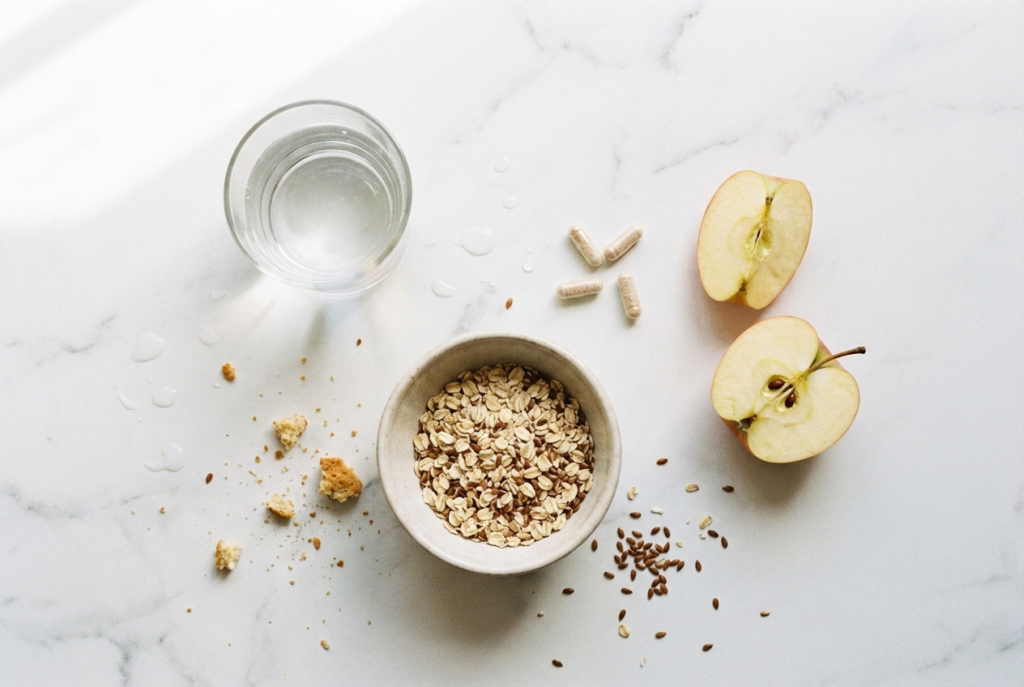
More fiber helps — but type matters. Soluble fiber (found in oats, flaxseed, psyllium husk, apples, beans) forms a gel in the digestive tract that softens stool and adds bulk that stimulates peristalsis. Insoluble fiber (raw bran, fibrous vegetables) can worsen bloating on a slow-moving gut without the same benefit.
The clinical target is 25–38g of fiber daily, but increasing too quickly when already constipated can increase gas and discomfort. Gradual increase over 1–2 weeks is better. Psyllium husk is particularly well-studied and can be added incrementally to any meal.
3. Movement (specifically walking)
Exercise stimulates gut motility through both direct mechanical effects and nervous system signaling. Walking after meals — even 10–15 minutes — activates the gastrocolic reflex more reliably than any supplement. For GLP-1 users who are already exercising for muscle preservation, this is an easy add-on with GI benefit as a side effect.
4. Consistent bathroom habits
The defecation reflex is trainable. Sitting on the toilet at the same time each day — ideally 20–30 minutes after a meal — can gradually re-establish normal rhythms disrupted by slowed transit. Using a footstool to elevate the feet (creating a more natural squatting angle) reduces the mechanical effort required.
5. Osmotic laxatives when needed
For constipation that doesn’t respond to lifestyle changes within 1–2 weeks, osmotic laxatives are the first-line OTC option. Polyethylene glycol (MiraLAX) works by drawing water into the colon — gentle, non-habit-forming, and compatible with Ozempic. Magnesium citrate is an alternative. Stimulant laxatives (senna, bisacodyl) are appropriate for occasional use but less suitable for the ongoing, slow-transit constipation that semaglutide produces.
6. Probiotics (emerging evidence, not proven)
Probiotic strains including Bifidobacterium and Lactobacillus, with at least 1 billion CFUs, show some evidence for supporting regular bowel movements — and fermented foods like yogurt with live cultures, kefir, and kimchi can complement supplementation. The evidence base here is real but modest. Probiotics are unlikely to fully resolve motility-driven constipation on their own, but they may help maintain gut environment, particularly given that GLP-1s appear to alter gut microbiome composition.

What’s Different: Constipation vs. Bloating
These are related but distinct problems and often confused.
Our GLP-1 side effects guide covers the mechanism behind gas accumulation on GLP-1s — which involves fermentation in a slow-moving gut and swallowed air. Constipation is specifically about reduced bowel movement frequency and hard, difficult-to-pass stool. The two often co-occur, but treating one doesn’t automatically address the other.
Increasing fiber aggressively when primarily constipated, for example, can temporarily worsen bloating. Managing them in parallel requires some sequencing — prioritize hydration and soluble fiber first, osmotic laxatives if needed, and hold off on large fiber increases until stool consistency improves.
When Constipation Is a Warning Sign
Most constipation on Ozempic is uncomfortable but not dangerous. But there are situations where it warrants a call to your prescriber or urgent care.
Contact your doctor if you experience:
- No bowel movement for more than 3–4 days despite hydration and OTC laxatives
- Severe abdominal pain or cramping
- Vomiting alongside constipation
- Bloating that is sudden and extreme
- Blood in the stool
- Fever alongside GI symptoms
Rare but serious complications of persistent constipation include bowel obstruction (ileus). Severe or long-lasting constipation that doesn’t improve with diet and lifestyle changes warrants medical evaluation, and your doctor may advise pausing or stopping Ozempic treatment.
Clinicians should remain vigilant for rare serious complications such as bowel obstruction, particularly in patients with pre-existing motility disorders. If you have a history of slow gut motility, gastroparesis, or bowel surgery, make sure your prescriber knows before starting a GLP-1.
Does This Improve Over Time?
For most people, yes — partially. Among patients who continued on semaglutide, the prevalence of constipation decreased gradually over time for those experiencing ongoing GI side effects. But “gradually” is the operative word. Unlike nausea, which can improve meaningfully within weeks, constipation tends to improve slowly and incompletely on higher doses.
The most reliable path to improvement is: consistent hydration, adequate soluble fiber, daily movement, and OTC osmotic laxatives when needed — not waiting it out passively.
If constipation is severe enough to significantly affect quality of life after 4–6 weeks of proactive management, it’s worth a conversation with your prescriber about whether a dose adjustment makes sense. GI adverse events led to dose reduction or temporary treatment interruption in 12.5% of semaglutide participants in the STEP trials — it’s a recognized clinical management tool, not a failure.
Key Takeaways
Constipation on Ozempic is real, common, and mechanistically distinct from other GI side effects. It lasts longer than nausea or diarrhea. It’s more prevalent at weight-loss doses than diabetes doses. And it doesn’t always resolve on its own.
The good news: it responds well to systematic management. Hydration and soluble fiber first. Consistent movement. Osmotic laxatives when needed. Probiotics as a supporting measure. And if none of that works within two weeks, your prescriber can help — this is a manageable side effect, not one you have to quietly endure.
Medical Disclaimer: This article is for informational purposes only and does not constitute medical advice. Always consult a qualified healthcare provider before starting or adjusting any treatment.
Not Sure You Qualify for GLP-1 Medication?
Use our free eligibility calculator to check your BMI and see which medications you may qualify for — no sign-up required.
✅ Ozempic
✅ Mounjaro