You started Ozempic to lose fat. But at some point — maybe when you looked in the mirror, maybe when climbing stairs felt harder than it used to, maybe when your doctor mentioned it at an appointment — you started wondering whether you were losing the right kind of weight.
Muscle loss on GLP-1 medications is one of the most talked-about concerns in the medical community right now, and one of the least discussed with patients before they start. It’s real, it’s significant, it has downstream consequences that compound over time — and it’s almost entirely preventable with the right approach.
This article goes deeper than the basics. Not just “eat protein and lift weights” — but why muscle loss happens on these specific medications, what the research actually shows about how much you’re losing, who is most at risk, and the evidence-based strategies that work.
What the Research Shows: How Much Muscle Are You Losing
Related: fatigue and insomnia on GLP-1s and exercising to preserve muscle.
The numbers from clinical trials are worth knowing precisely, because the range is wide and what you do matters enormously.
In the STEP 1 trial of semaglutide (Wegovy at 2.4mg), participants lost an average of 15.3 kg of total body weight. Of that, 6.92 kg — approximately 45% — was lean mass rather than fat. This significantly exceeded the standard “quarter fat-free mass rule,” which predicts that roughly 25% of weight loss typically comes from lean tissue in conventional dieting.
Across multiple studies, the range for lean mass as a percentage of total weight lost on semaglutide is approximately 20–45%, with most estimates landing in the 26–40% range. For tirzepatide (Mounjaro/Zepbound), the figure appears somewhat lower — around 25% — possibly because its dual GIP/GLP-1 mechanism affects body composition differently.
To put this in practical terms: if you lose 30 pounds on Ozempic without specific countermeasures, somewhere between 6 and 12 of those pounds may be muscle rather than fat. That’s a meaningful amount with real metabolic consequences.
An important nuance from newer research: A 2025 study published in Cell Metabolism used detailed analysis in mice to find that the lean mass decline on semaglutide was partly from skeletal muscle but significantly from other tissues — including the liver, which reduced in size by nearly half. Organ size reduction is generally considered a healthy adaptation to weight loss, not a harmful effect. This suggests that the commonly reported “muscle loss” numbers may overstate actual skeletal muscle loss specifically. However, the same study found that some muscles may lose strength even when mass appears preserved — pointing to functional decline that standard measurements miss.
The bottom line: some lean mass loss during GLP-1-mediated weight loss is expected and adaptive. The clinical concern is when it exceeds what is appropriate, particularly in people who are already vulnerable to muscle loss.
Why GLP-1 Medications Lead to More Muscle Loss Than Typical Dieting
Muscle loss during any caloric deficit is normal — your body burns both fat and lean tissue for energy when intake drops. But GLP-1 medications appear to produce somewhat higher lean mass losses than conventional calorie restriction, for several interconnected reasons.
Appetite suppression is aggressive and protein intake falls with it. GLP-1 medications dramatically reduce overall food intake. When appetite is suppressed to this degree, people don’t just eat less fat and carbohydrates — they eat less of everything, including protein. Protein is the raw material for muscle protein synthesis. Without adequate protein, even if you’re doing everything else right, muscle breakdown accelerates. A 2024 review noted specifically that GLP-1 users may shift toward lower-quality, lower-protein food choices compared to standard calorie-restricted dieters — possibly because protein-dense foods feel heavier and more unpleasant on a slow-emptying stomach.
The caloric deficit is often severe without people realizing it. Someone who was eating 2,500 calories daily before Ozempic might naturally drop to 900–1,200 calories with little effort. Extreme caloric restriction creates a catabolic environment where the body breaks down tissue — including muscle — for energy, particularly in the absence of exercise stimulus to protect it.
Exercise often drops alongside appetite. Fatigue, nausea, and reduced energy in the early weeks of GLP-1 treatment causes many people to reduce their activity. This is the worst time to reduce resistance exercise — the mechanical stimulus of lifting is what signals your body to preserve muscle even during a caloric deficit. Without that signal, muscle breakdown is unchecked.
Rapid weight loss doesn’t give tissue time to adapt. Gradual weight loss allows for a more adaptive muscle response. Rapid loss — even when metabolically beneficial — tends to take a higher proportion of lean tissue alongside fat.
Why Muscle Loss Matters More Than Most People Realize
Muscle is your metabolic engine. Skeletal muscle is the primary tissue that burns calories at rest. Every pound of muscle you lose lowers your resting metabolic rate — permanently unless actively rebuilt. This is the metabolic adaptation that makes weight regain after stopping GLP-1 medications so fast and so difficult to reverse. You’re not just lighter; you’re running a slower metabolism than before you started.
Losing muscle now makes stopping harder later. A common pattern: someone takes Ozempic for 12–18 months, loses significant weight including meaningful muscle mass, then stops due to cost or insurance. The hunger comes back. But now they have less muscle mass, a lower metabolic rate, and their body is primed to restore fat stores rapidly. This is the biological mechanism behind much of the “Ozempic rebound” phenomenon — it’s not just hunger, it’s metabolic.
Blood sugar control depends partly on muscle. Skeletal muscle is responsible for approximately 70–80% of glucose uptake after meals. When you lose muscle, insulin resistance worsens, blood sugar control declines, and the very metabolic benefits GLP-1 medications produce are partially undermined. A 2025 Harvard study specifically found that greater muscle loss on semaglutide was associated with less improvement in HbA1c levels — meaning people who lost more muscle got less diabetes benefit from the medication.
Sarcopenia compounds with age. Natural muscle loss with aging (sarcopenia) accelerates after 60 and progresses at roughly 1–2% per year. Adults over 65 who are already at elevated sarcopenia risk face a particularly poor trade-off: the weight loss is valuable, but accelerating muscle loss can push them toward frailty, falls, and loss of independence. An editorial in Annals of Internal Medicine specifically warned that GLP-1 medications may exacerbate sarcopenia in older adults, calling for baseline assessment of muscle mass and function before prescribing.
The aesthetic dimension. Many people lose weight on Ozempic and don’t look the way they expected. The hollowed face (“Ozempic face”), the flat “Ozempic butt,” the general deflated rather than toned appearance — these are largely the result of losing fat and muscle simultaneously rather than fat alone. Two people can weigh the same but look dramatically different depending on whether their weight loss preserved muscle.
Who Is Most at Risk
Not everyone loses the same proportion of muscle. Research identifies several factors that concentrate risk:
Women. A 2025 Harvard study presented at the Endocrine Society’s annual meeting found that being female was independently associated with greater muscle loss on semaglutide after accounting for weight loss. The mechanism isn’t fully understood but may involve hormonal differences in muscle protein metabolism.
Older adults. People over 65 start with less muscle mass reserve and faster natural muscle loss rates. The same absolute amount of medication-induced muscle loss represents a much larger proportion of their baseline in an already-vulnerable system. An editorial in Annals of Internal Medicine specifically called for careful patient selection and baseline muscle assessment in this group.
People not doing resistance training. This is the single most modifiable risk factor. Without the mechanical stimulus of lifting, the body has no signal to preserve muscle during a caloric deficit.
People eating insufficient protein. The research is consistent: lower protein intake is independently associated with greater muscle loss on semaglutide. If you’re eating 800 calories a day and most of it is crackers and yogurt, your muscle is going to suffer.
People losing weight very rapidly. The faster the weight loss, the higher the proportion of lean tissue lost. This is dose-related: people on higher doses losing weight faster tend to lose more muscle proportionally than people losing weight more gradually.
The Evidence-Based Prevention Strategies
Here’s what actually works, in order of impact:
1. Resistance Training — the Single Most Important Intervention
A prospective 6-month study of 200 adults on semaglutide or tirzepatide, with medically supervised resistance training and protein guidance from the start, found that participants lost approximately 13% of body weight but only about 3% of muscle mass. This is dramatically better than trial outcomes without structured resistance training.
The mechanism: lifting weights creates mechanical stress on muscle fibers, which signals the body to maintain and repair them even in a caloric deficit. Without this signal, the body treats muscle tissue as available fuel alongside fat. With it, muscle is protected.
What you need: at minimum, two resistance training sessions per week. Three is better. Full-body compound movements — squats, deadlifts, rows, pressing movements — recruit the most muscle mass per exercise and produce the strongest preservation signal. You don’t need to be in a gym. Resistance bands, bodyweight exercises, and home dumbbells all work if you’re applying progressive overload — gradually increasing the challenge over time.
2. Protein — the Essential Raw Material
Target 1.2–1.5 grams per kilogram of body weight per day as a minimum. For a 180-pound person, that’s roughly 98–122 grams. On a suppressed appetite, hitting this requires intentionality — prioritizing protein at every meal before anything else.
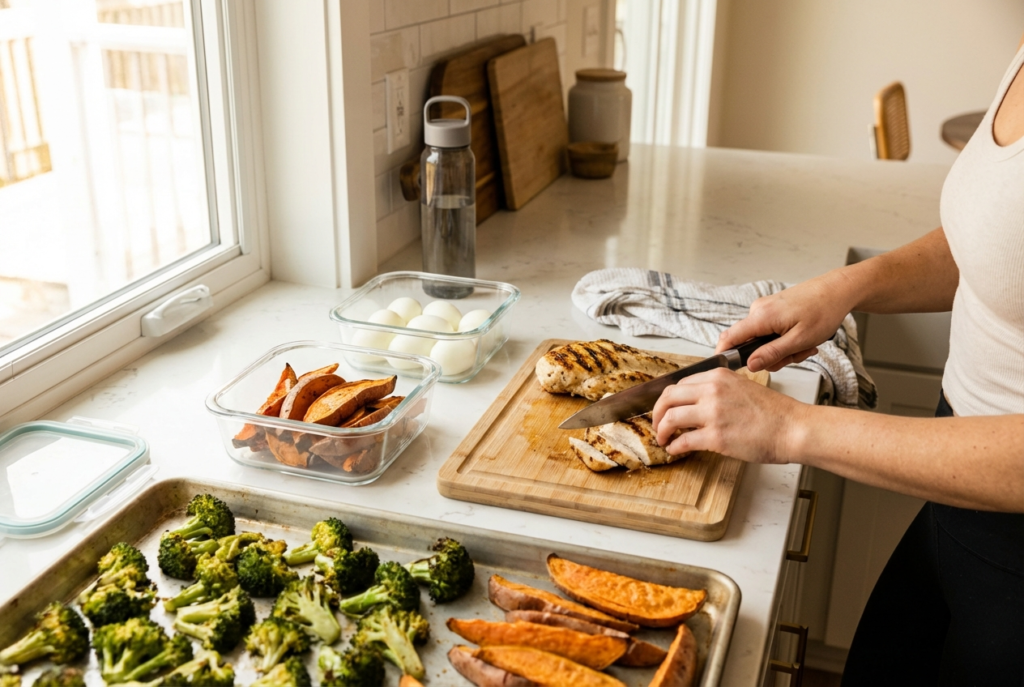
Practical sources that are easy on a slow-emptying stomach: Greek yogurt (15–20g per serving), cottage cheese (14g per half cup), protein shakes using whey isolate or pea protein (20–30g per serving), eggs, white fish, chicken breast. Eat protein first at every meal.
3. Slow Down the Weight Loss Pace
This runs counter to the “more is better” impulse, but the evidence is consistent: slower weight loss preserves a higher proportion of lean mass than rapid weight loss. If you’re losing 4–5 pounds per week, you’re losing more muscle proportionally than someone losing 1–1.5 pounds per week.
If your weight loss pace is very aggressive — possible on higher doses — talk to your prescriber about whether staying at a lower dose longer might produce better body composition outcomes even if total weight loss is slower. The goal isn’t the lowest number on the scale fastest; it’s the best body composition over time.
4. Assess Your Actual Body Composition, Not Just Weight
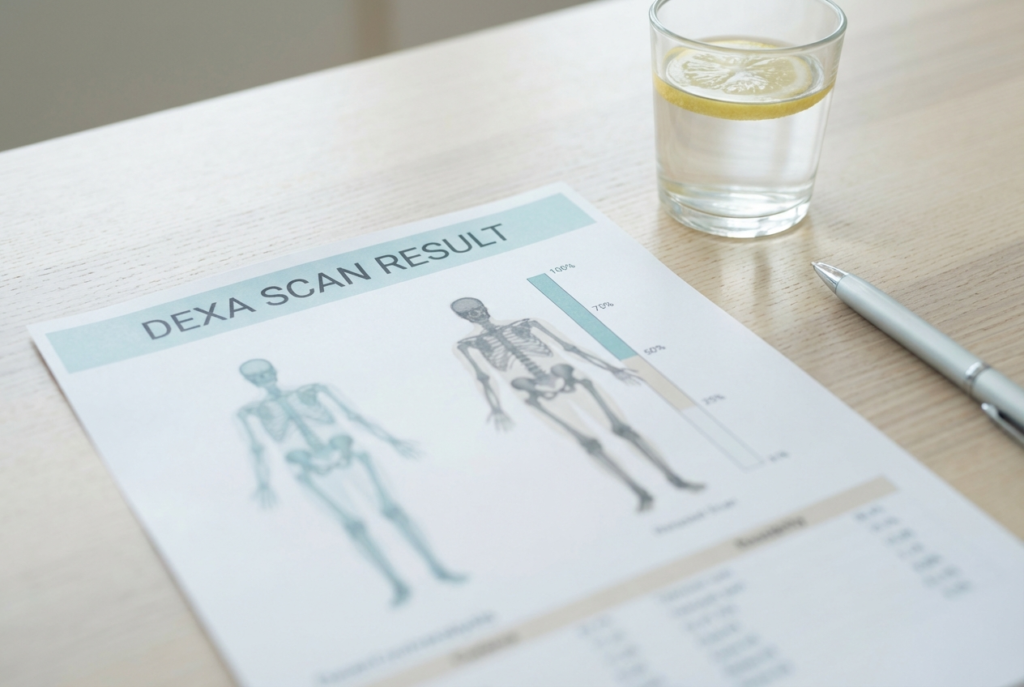
A standard scale tells you total weight. It doesn’t tell you how much of what you’re losing is fat versus muscle. If you’re serious about preserving muscle, the most useful tool is a DEXA scan (dual-energy X-ray absorptiometry) — a low-radiation scan that measures fat mass, lean mass, and bone density separately.
DEXA scans are available at many sports medicine clinics, university health centers, and increasingly at direct-pay facilities for $50–$150. Getting a baseline before you start and a follow-up scan at 6 months tells you what your weight loss is actually made of — and whether your current approach is working.
5. Don’t Let Nausea Become an Excuse to Stop Exercising
Nausea and fatigue in the first weeks are real, and pushing through intense exercise during genuine illness is wrong. But gentle resistance training — chair squats, resistance bands, light dumbbells, bodyweight exercises — is appropriate even during mild-to-moderate nausea, and the muscle preservation benefits vastly outweigh the short-term discomfort.
The injection day cycle matters: days 4–7 before your next weekly injection are typically when you have the most energy. Schedule your most demanding workouts in this window.
6. Watch the Emerging Pharmacology
Several companies are developing medications specifically designed to preserve or build muscle during GLP-1-mediated weight loss. Bimagrumab combined with semaglutide has shown in early studies: loss of 6.5% body weight but increased lean mass by 3.6% and decreased fat mass by 20.5% — essentially the ideal body composition outcome. Myostatin inhibitors and other approaches are in clinical trials.
The Bottom Line
Muscle loss on Ozempic and other GLP-1 medications is real, clinically significant, and frequently underappreciated — both by patients and by prescribers. Up to 40% of the weight you lose may be lean tissue without specific countermeasures.
But unlike most GLP-1 side effects, muscle loss is almost entirely preventable with the right approach. The evidence is clear: people who do resistance training consistently and hit protein targets can lose significant amounts of body weight with minimal muscle loss — and in some cases, actual muscle gain.
The medication opens the door to weight loss that previously wasn’t accessible. What you do with that door determines whether your results are durable, your metabolism supports long-term maintenance, and your body reflects the transformation your efforts deserve.
Start the resistance training now. Eat the protein first. Don’t just watch the scale — watch what the scale is made of.
This article is for informational purposes only and is not a substitute for professional medical advice. Consult your healthcare provider before starting a new exercise program, especially while taking GLP-1 medication.
Do You Qualify for GLP-1 Medication?
Our free eligibility calculator uses the same BMI criteria doctors use. Get an instant estimate — no sign-up needed.