Most people starting Ozempic or Wegovy have heard about nausea, hair loss, and the plateau. Almost nobody has been told about the eyes.
Related: fatigue and insomnia on GLP-1s and the complete GLP-1 side effects guide.
In 2024, researchers at Harvard’s Mass Eye and Ear published a study in JAMA Ophthalmology that identified something unexpected: patients taking semaglutide appeared to have a significantly higher risk of a rare but serious eye condition called NAION — non-arteritic anterior ischemic optic neuropathy. The condition causes sudden, painless vision loss, often in one eye, often permanent.
By June 2025, the European Medicines Agency had formally classified NAION as a “very rare” side effect of semaglutide medicines including Ozempic, Wegovy, and Rybelsus. The WHO issued a safety alert. Lawsuits began accumulating — as of March 2026, over 3,363 cases were consolidated in federal multidistrict litigation in Pennsylvania.
The US FDA has not yet updated the Ozempic or Wegovy label with a specific NAION warning as of this writing, though it acknowledges “vision changes” as a potential serious side effect and continues monitoring the situation.
This article explains what NAION is, what the research actually shows, who is at highest risk, what symptoms to watch for, and what the world’s leading ophthalmologists say you should do if you’re currently taking a GLP-1 medication.
What Is NAION
NAION stands for non-arteritic anterior ischemic optic neuropathy. It’s sometimes called an “eye stroke” — not because it works exactly like a brain stroke, but because the underlying mechanism is similar: blood flow to the front part of the optic nerve gets disrupted, depriving it of oxygen, causing tissue damage.
The optic nerve is the cable that carries visual information from your eye to your brain. When its blood supply is cut off, the nerve tissue dies. Unlike some other forms of vision damage, NAION does not repair itself — the vision loss it causes is typically permanent.
NAION usually affects one eye at a time. It happens suddenly, often noticed when waking up in the morning. There is no pain. The vision loss can range from a partial shadow or blur to near-complete loss of vision in the affected eye. Approximately 15% of people who experience NAION in one eye will later develop it in the other eye as well.
NAION is not a common condition. It affects roughly 2 to 10 people per 100,000 per year in the general population and is most commonly seen in adults over 50.
The Research: What the Studies Actually Show
The signal started with a single observation. Dr. Joseph Rizzo, a neuro-ophthalmologist at Mass Eye and Ear (Harvard Medical School’s teaching hospital), saw one patient with NAION who happened to be on semaglutide. Then a resident mentioned another case from the emergency room the same week. Then a third case the following week.
“When I saw a third such case, I knew this was too far out of the ordinary,” Dr. Rizzo said.
His team then analyzed 17,000 Mass Eye and Ear patient records. What they found was striking: people with diabetes who had been prescribed semaglutide were more than four times more likely to be diagnosed with NAION than people with diabetes who hadn’t taken semaglutide. For patients taking semaglutide for obesity or overweight, the increased risk was even higher — nearly eight times the rate seen in non-users.
These numbers need important context, which we’ll get to. But the finding was significant enough to be published in JAMA Ophthalmology in July 2024 — one of the most prestigious ophthalmology journals in the world.
Since then, additional research has followed. A 2025 study from Johns Hopkins analyzed health records for nearly 37 million adults with type 2 diabetes and found that patients taking semaglutide had a 32% increased relative risk of NAION compared to non-users. A separate 2025 analysis from multiple large databases found hazard ratios between 1.3 and 2.3 — meaning patients on semaglutide had between 30% and 130% higher odds of developing NAION depending on the study population and methodology.
A notable wrinkle: the Johns Hopkins study also found that patients on semaglutide did not have a significantly increased risk compared to patients on other GLP-1 diabetes medications — raising the possibility that the association may reflect the underlying disease burden of the population taking these drugs, not semaglutide itself.
The research is genuinely evolving and not fully settled. What can be said with confidence is: there is a consistent signal across multiple independent studies and datasets. The absolute risk remains low. Causation has not been proven. But the pattern is significant enough that multiple regulatory agencies have acted on it.
What the Regulators Have Done
European Medicines Agency (June 2025): After a formal review by its Pharmacovigilance Risk Assessment Committee, the EMA classified NAION as a “very rare” side effect of semaglutide, estimated to affect up to 1 in 10,000 users. It recommended updating the product information for Ozempic, Wegovy, and Rybelsus to include this risk, and advised that patients who develop NAION while taking semaglutide should stop the medication and seek immediate medical care.
UK MHRA: Issued a parallel safety communication alongside the EMA decision.
World Health Organization (June 2025): Issued a safety alert recommending that NAION be included as a potential risk in the Risk Management Plan for semaglutide.
US FDA: As of March 2026, the FDA has not added a specific NAION warning to US labeling for Ozempic or Wegovy. The agency acknowledges “vision changes” as a potential serious side effect and continues monitoring through its adverse event reporting system. US labeling is expected to be updated but timing is unclear.
The Absolute Risk in Plain Terms
The relative risk numbers sound alarming. But relative risk without absolute risk context is misleading — and the absolute risk of NAION remains low.
NAION affects approximately 2–10 people per 100,000 per year in the general population. If semaglutide roughly doubles that risk (a reasonable midpoint from the available data), that becomes approximately 4–20 people per 100,000 per year among semaglutide users. In other words: still a rare event, affecting well under 0.1% of people annually.
The EMA’s estimate — up to 1 in 10,000 — aligns with this framework.
To put this in context: the cardiovascular benefits of semaglutide (a 20% reduction in heart attack, stroke, and cardiovascular death) affect a much larger proportion of the target population than NAION does. Dr. Rizzo himself, who conducted the original research that started this conversation, co-authored an editorial stating that patients should not stop taking semaglutide based on NAION risk alone — particularly given the serious consequences of stopping for people with well-controlled diabetes or cardiovascular disease.
The key point is not that everyone on Ozempic should be worried. It’s that certain people face meaningfully higher risk, and everyone should know what symptoms to watch for.
Who Is at Higher Risk
Not everyone on a GLP-1 medication has equal NAION risk. Several factors appear to concentrate the risk:
Pre-existing vascular risk factors. High blood pressure, type 2 diabetes with end-organ damage, high cholesterol, and cardiovascular disease all independently increase NAION risk. People on Ozempic who already have these conditions are starting from a higher baseline.
“Optic disc at risk” anatomy. Some people have a naturally small, crowded optic nerve head — a structural characteristic visible on eye examination. This anatomy has long been recognized as a risk factor for NAION, independent of any medication. People with this anatomy appear to be particularly susceptible when additional vascular stress is present.
Older age. NAION is most common in adults over 50. Risk increases with age.
Severe sleep apnea. Associated with reduced oxygen delivery and vascular dysregulation affecting the optic nerve.
Higher doses of semaglutide. The data suggests the risk is higher with Wegovy (2.4mg) than with Ozempic (maximum 2mg) — possibly because higher GLP-1 receptor activation causes more pronounced fluid shifts and vascular changes around the optic nerve. Tirzepatide (Mounjaro/Zepbound), which targets both GLP-1 and GIP receptors, appears to have a lower NAION signal than semaglutide alone — the GIP component may partially counteract the effect.
Rapid weight loss or blood sugar changes. Some researchers hypothesize that the rapid physiological changes associated with starting GLP-1 medications — significant drops in blood sugar, fluid shifts, blood pressure changes — may temporarily stress optic nerve perfusion in vulnerable individuals.
Symptoms: What to Watch For and When to Act
The critical message for anyone on a GLP-1 medication: know what NAION looks like, and treat any sudden vision change as an emergency.
Symptoms of NAION include:
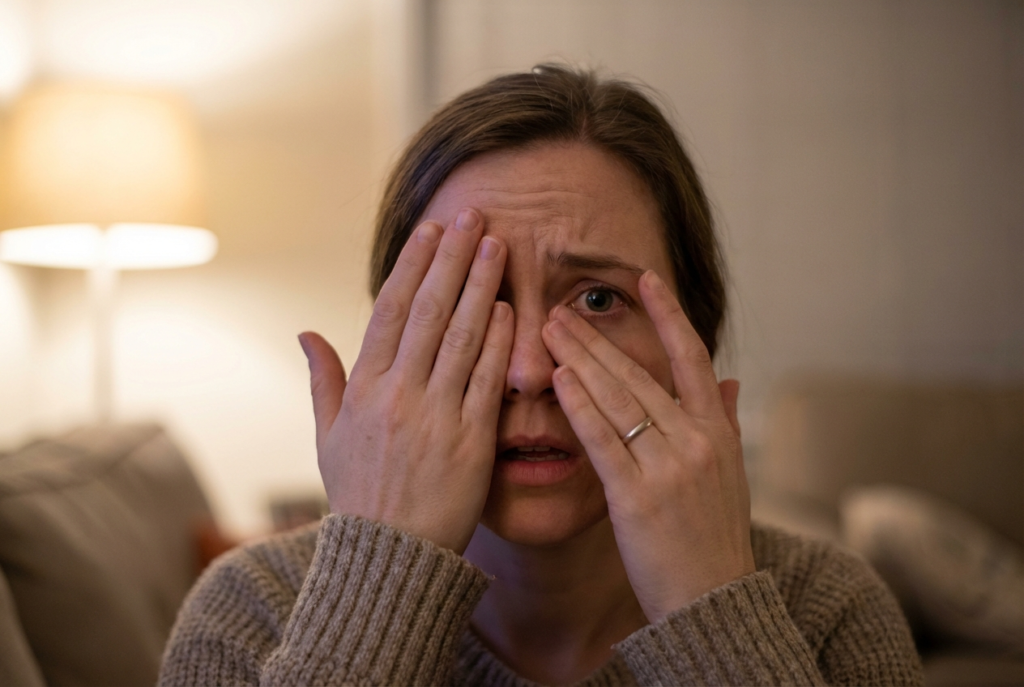
- Sudden loss of vision in one eye — typically partial at first, often noticed on waking
- A shadow, blur, or missing area in one eye’s visual field
- Blurry vision in one eye that doesn’t improve
- Loss of peripheral (side) vision
- Distorted colors or decreased color perception in one eye
- Decreased vision that is painless — NAION does not cause eye pain
What makes NAION dangerous from a treatment perspective: there is currently no proven effective treatment for NAION once it occurs. There are no medications that reliably reverse the damage. This is why recognizing and responding to early symptoms is critical — not because treatment can undo the damage, but because stopping the medication and addressing underlying risk factors may prevent progression and protect the other eye.
If you experience any sudden change in vision in one eye — regardless of whether it seems minor — contact an eye doctor or emergency eye service immediately. Do not wait to see if it improves. Do not assume it’s tiredness or a minor issue. The window for intervention is narrow.
What to Do If You’re Currently on a GLP-1 Medication
Should you stop taking your medication? Based on current expert consensus — including from the researchers who identified the risk — most patients should not stop their GLP-1 medication based on NAION risk alone. The benefits of these medications for diabetes management, cardiovascular health, and weight-related conditions are substantial and well-documented. For most patients, the absolute risk of NAION remains low.
However, there are practical steps worth taking:
Tell your prescriber you’re aware of the NAION signal and ask them to document it. If you have any pre-existing eye conditions, diabetes with eye complications (diabetic retinopathy), or any of the risk factors listed above, this conversation is more urgent.
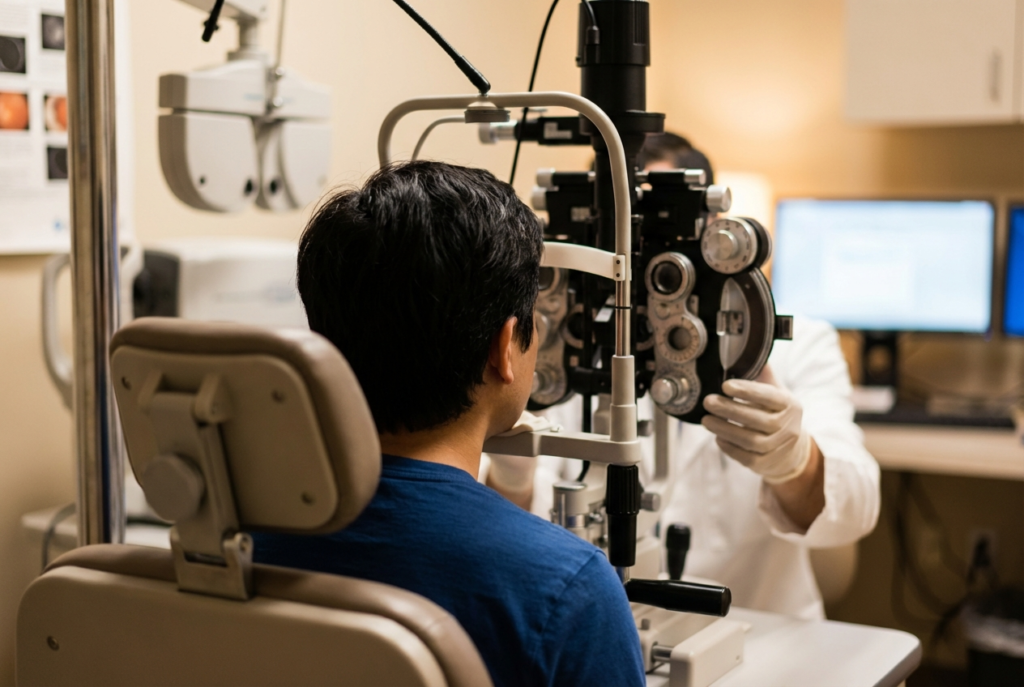
Schedule a baseline eye examination with an ophthalmologist or optometrist if you haven’t had one recently. A baseline exam establishes your current optic nerve appearance — including whether you have the “optic disc at risk” anatomy — and creates a reference point for future comparisons.
Get your blood pressure, blood sugar, and cholesterol well-controlled. These are modifiable risk factors for NAION regardless of medication, and optimizing them reduces your baseline risk.
Know the symptoms and take any sudden vision change seriously. This is the single most important thing. NAION cannot be treated after the fact, but knowing what it looks like means you can respond immediately rather than waiting for a routine appointment.
If you develop NAION while on semaglutide: The EMA recommends stopping the medication. Discuss with your prescriber whether continuing, switching to a different GLP-1, or stopping is appropriate given your overall health situation. Tirzepatide (Mounjaro/Zepbound) may carry a lower NAION risk if continued treatment is necessary.
The Bigger Picture
The NAION story is an example of something important about GLP-1 medications: they are remarkable drugs that have helped millions of people, and our understanding of their full risk profile is still developing. The original clinical trials — conducted under highly controlled conditions with carefully selected populations — did not flag NAION because it is rare enough that standard trial sizes wouldn’t reliably capture it.
Now that tens of millions of people are taking these medications in the real world, signals like NAION emerge from the data. This is how post-market surveillance is supposed to work. The fact that European regulators acted in June 2025 and the FDA is actively monitoring the situation suggests the system is functioning — not that there is a hidden crisis.
The honest assessment: NAION is a real, rare, serious side effect of semaglutide. It primarily concentrates in patients with pre-existing vascular risk factors. The absolute risk for most patients is low. The risk of untreated diabetes, cardiovascular disease, or obesity is much higher. But the lack of any effective treatment once NAION occurs makes prevention — primarily through symptom awareness and prompt response — the only real tool available.
Know what to look for. Tell your eye doctor you’re on a GLP-1 medication. And if your vision changes suddenly in one eye, treat it as an emergency.
This article is for informational purposes only and reflects information available as of early 2026. It is not a substitute for professional medical advice. If you experience sudden vision changes while taking any GLP-1 medication, seek immediate medical attention. Do not stop any prescribed medication without consulting your healthcare provider.
Do You Qualify for GLP-1 Medication?
Our free eligibility calculator uses the same BMI criteria doctors use. Get an instant estimate — no sign-up needed.