Quick Summary
Before overhauling your diet, it helps to confirm a GLP-1 is right for you.
- GLP-1 medications slow digestion, which means what and how much you eat has a bigger impact than ever before.
- Prioritize lean protein at every meal to protect muscle while losing fat.
- Smaller, more frequent meals tend to work better than three large ones.
- Some foods — especially fatty, greasy, or highly processed ones — dramatically increase nausea risk.
- Hydration is critical; dehydration is one of the most common issues on GLP-1 medications.
- Consider supplementing with protein powder, B12, and collagen to fill nutritional gaps.
If you’ve started Ozempic (or any GLP-1 medication like Wegovy or Mounjaro) and you’re wondering why some meals leave you feeling fine while others send you running for the couch clutching your stomach — your food choices are almost certainly playing a role.
Knowing what to eat on Ozempic isn’t just about maximizing weight loss. It’s about feeling good enough to actually stick with the medication long-term, protecting your muscle mass, staying nourished on smaller portions, and avoiding the nausea, reflux, and sluggishness that knock so many people off course.
Why Food Choices Matter More on GLP-1 Medications
GLP-1 receptor agonists slow gastric emptying — food sits in your stomach longer than it normally would. This is partly why you feel full faster. But it also means that fatty, rich, or hard-to-digest foods that your gut would normally process in a few hours might sit there much longer, causing bloating, nausea, reflux, and general misery.
Think of it like this: before Ozempic, you had a fairly standard digestive conveyor belt. On Ozempic, that belt slows way down. Load it with heavy cargo — greasy burgers, fried food, creamy pasta — and the whole system backs up. Load it with lighter, easier-to-process food and things move through much more comfortably.
The Most Important Nutrient: Protein
If there’s one thing you take away from this entire guide, make it this: eat enough protein, every single day.
When you lose weight through caloric restriction, your body doesn’t just burn fat — it also breaks down muscle tissue for energy, especially if you’re not eating enough protein and not doing resistance exercise. Studies on GLP-1 users have shown that a significant portion of weight lost can come from lean muscle mass, not just fat. Losing muscle sets you up for weight regain later, particularly if you ever stop the medication.
Most GLP-1 users should aim for at least 0.7 to 1 gram of protein per pound of goal body weight daily. That’s hard to hit on a suppressed appetite — which is where food choices become strategic.
Best Protein Sources on Ozempic
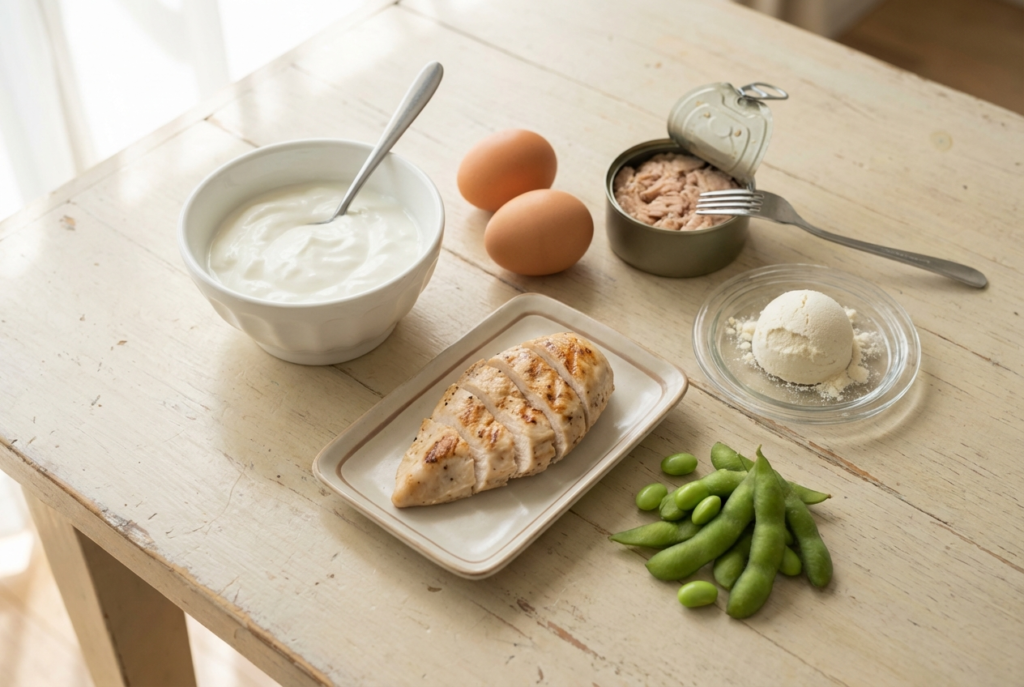
- Greek yogurt (plain) — high protein, easy to eat in small amounts, contains probiotics
- Eggs — versatile, easy on the stomach; scrambled or poached are better tolerated than fried
- Cottage cheese — surprisingly high in protein, blends well into smoothies
- Canned fish (tuna, salmon, sardines) — convenient, protein-dense; choose water-packed
- Skinless chicken breast or thighs — keep cooking simple (baked, poached, grilled), avoid heavy sauces
- White fish (cod, tilapia, halibut) — very lean, very mild, easy on a sensitive stomach
- Tofu and edamame — great plant-based options, generally well-tolerated
- Protein shakes — often the most practical way to hit protein targets when appetite is suppressed
Vegetables That Work (and Some to Watch Out For)
Generally Well-Tolerated
- Zucchini and yellow squash
- Cucumber
- Cooked spinach and leafy greens (cooked is easier than raw)
- Bell peppers (cooked), carrots (cooked), green beans
- Sweet potato (moderate amounts)
Eat Cautiously (Gas-Producers)
- Broccoli and cauliflower (especially raw)
- Brussels sprouts, cabbage, sauerkraut
- Onions and garlic in large amounts
- Beans and lentils — start with small portions
What to Eat After Your Injection
For most people on weekly injectable GLP-1s, the 24–72 hours after injection are when nausea peaks and appetite is most suppressed. Strategy for those days:
- Keep meals very small — half-portions or less
- Stick to bland, easy foods: plain crackers, plain rice, boiled chicken, scrambled eggs, broth-based soups
- Prioritize fluids — warm broth, herbal tea, water with electrolytes
- Avoid rich, fatty, or spicy food entirely on injection day and the day after
- Cold or room-temperature foods often feel better than hot meals when nauseated
As you move toward the end of the week, appetite typically returns — this is your best window to focus on hitting protein targets before the cycle repeats.
Foods That Trigger Nausea on Ozempic
- High-fat foods: fried chicken, fast food, pizza, creamy pasta sauces — fat slows gastric emptying significantly on top of what the medication is already doing
- Large portions: probably the single biggest trigger
- Carbonated drinks: cause gas and bloating in an already slow-moving gut
- Alcohol: worsens nausea and changes how your body processes it on GLP-1
- Highly spiced or acidic foods: can irritate an already-sensitive stomach
- Very sweet foods: can trigger nausea in users who find their tolerance for sweetness has changed
Good Choices vs. Avoid: Quick Reference
| Good Choices on Ozempic | Avoid or Minimize |
|---|---|
| Grilled or baked chicken breast | Fried chicken |
| Greek yogurt (plain) | Full-fat ice cream |
| Eggs (scrambled, poached) | Bacon and sausage (high fat) |
| White fish (cod, tilapia) | Greasy fast food |
| Cooked vegetables (zucchini, green beans) | Raw cruciferous veg in large amounts |
| Plain rice or quinoa | Creamy pasta dishes |
| Broth-based soups | Cream-based chowders |
| Herbal tea, electrolyte water | Carbonated drinks, alcohol, sugary drinks |
| Protein shake (low sugar) | Sugary meal replacements |
| Cottage cheese | High-fat aged cheeses in large amounts |
Meal Timing: Smaller and More Frequent Works Better
Many successful GLP-1 users shift to 4–6 smaller eating occasions throughout the day. This helps hit protein targets without overwhelming your stomach, maintains blood sugar stability, and reduces nausea by keeping portions small.
Finish your last meal or snack at least 2–3 hours before lying down — nighttime reflux is a common side effect related to slowed gastric emptying that gets worse when you eat close to bedtime.
A Sample Day of Eating on Ozempic
Morning (7–8am): ¾ cup plain Greek yogurt with a small handful of blueberries. Coffee or herbal tea.
Mid-morning (10–11am): 1 hard-boiled egg and sliced cucumber. Glass of electrolyte water.
Lunch (12–1pm): Small bowl of chicken and rice soup, or half a portion of grilled chicken with roasted zucchini.
Afternoon (3pm): Protein shake, or cottage cheese with a few slices of bell pepper.
Dinner (6pm): 3–4 oz baked salmon or white fish, ½ cup cooked quinoa, steamed green beans.
Evening (if hungry, 8pm): Small serving of cottage cheese or a few crackers with nut butter.
Total protein: approximately 100–120g. Total calories: roughly 1,200–1,500 depending on portion sizes.
Hydration: The Underrated Priority
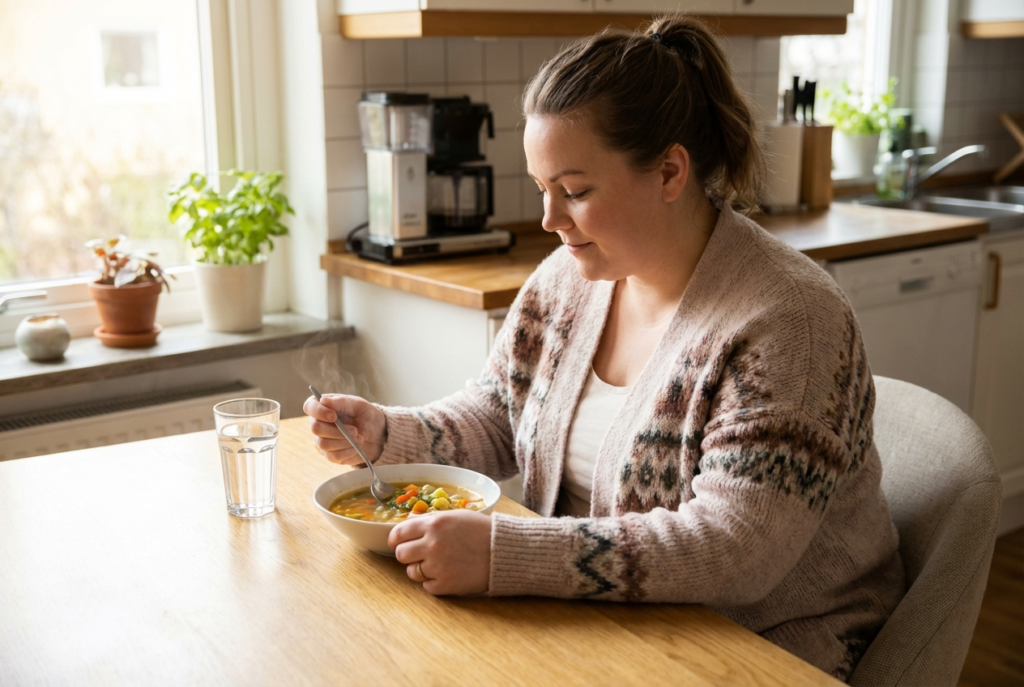
Dehydration is extremely common on GLP-1 medications — a significant amount of daily fluid intake comes from food, and when you stop eating as much, that fluid disappears too. Dehydration shows up as headaches, dizziness, constipation, fatigue, and brain fog — often mistakenly attributed to the medication.
Target at least 8–10 cups of fluid per day. If plain water feels unappealing, try herbal teas (ginger for nausea), low-sugar electrolyte drinks, bone broth, or cucumber-infused water. Set reminders — the thirst signal can be blunted alongside hunger on these medications.
Supplements Worth Considering
Protein powder — the most practical supplement for GLP-1 users. Whey isolate or pea protein in a shake provides 20–30g protein when you can’t face another meal. Look for options with minimal added sugar.
Vitamin B12 — semaglutide can affect B12 absorption. Deficiency causes fatigue, brain fog, and nerve tingling — symptoms easy to misattribute to the medication. A standard B12 or daily multivitamin is a reasonable addition.
Collagen peptides — hair loss on GLP-1 is driven by nutritional stress during rapid weight loss. Collagen provides glycine, proline, and hydroxyproline — the amino acids that make up hair structure. Add a scoop to coffee or yogurt; it’s tasteless and dissolves easily.
Also worth considering: magnesium (supports sleep and muscle function), vitamin D, and iron if your provider finds you’re running low.
This article is for informational purposes only and is not a substitute for professional medical advice. Always consult your healthcare provider before making changes to your diet or supplement routine while on GLP-1 medication.